
Blog
How to Clean Plastic Dining Chairs: The Easy, Proven Guide

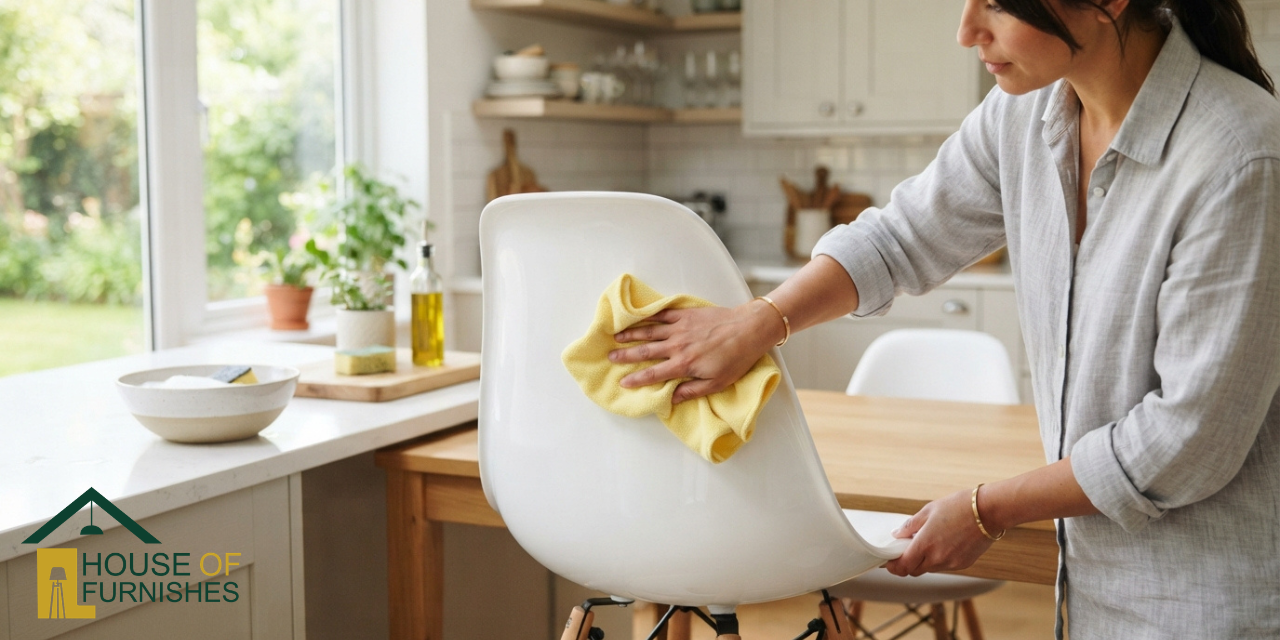
How to clean plastic dining chairs, good news first: they’re the easiest furniture you own — warm water, a drop of washing-up liquid and a soft cloth handle 95% of everything. The bad news: the remaining 5% (scuffs, stubborn stains, one very common cleaning mistake) is where people permanently damage a shell trying to help it. Here’s the complete routine, including the never-use list that matters more on polypropylene than almost any other surface.
Why Soft Matters: Know Your Shell
Modern moulded chairs are polypropylene — smooth, slightly glossy thermoplastic. That smoothness is the finish; there’s no coating on top. Anything abrasive doesn’t clean it, it sands it — micro-scratches turn glossy shells hazy and then, cruelly, make them attract dirt faster. Every rule below flows from this one fact.
How to Clean Plastic Dining Chairs: The Three Levels
Level 1 — The after-dinner wipe (30 seconds)
Damp cloth over the seat after messy meals. Sauce that sits overnight is a project; sauce wiped warm is nothing. This wipe-clean superpower is half the reason the moulded shell became the world’s kitchen chair (the comfort earned the other half — see are eames dining chairs comfortable).
Level 2 — The weekly proper clean (2 minutes per chair)
- Mix: warm water + one drop of washing-up liquid per bowl
- Wipe the whole shell — seat, back, and the underside edge where fingers grip to move the chair (the greasiest, most forgotten spot on any dining chair)
- Rinse-wipe with plain water — soap residue dulls gloss into film
- Dry with microfibre — air-drying leaves spots, especially on dark shells; a set of blue dining chairs will report every skipped drying step in the right light
- Don’t skip the legs: wooden dowels want the damp cloth then immediate drying (still wood), and the criss-cross wire struts give up their dust to a cloth wrapped over one finger
Level 3 — Stains, scuffs and rescues
- Set-in food stains (tomato, turmeric, curry): bicarbonate-of-soda paste, soft cloth, gentle circles, five minutes, rinse. Bicarb is the most abrasive thing that should ever touch the shell — applied softly, it’s just barely abrasive enough (household institutions like Good Housekeeping have championed this exact method for decades)
- Grease films near the hob: stronger soap ratio, warm water, two passes
- Shoe scuffs: a standard pencil eraser, genuinely — lifts rubber transfer without scratching
- Pen and marker: cotton bud, a little isopropyl alcohol, dab the mark only, wipe immediately. Test under the seat first
- Yellowing on white shells: prevention is the only cure — it’s UV, so keep white dining chairs out of all-day direct sun. Bleaching “hacks” strip gloss and accelerate the problem
The Never List (Polypropylene Edition)
- Never scouring pads, magic erasers or cream cleansers — sandpaper in disguise; one enthusiastic session permanently hazes a shell
- Never bleach or solvents (acetone, thinners) — they etch the plastic itself
- Never a pressure washer — the jet forces water into shell-to-base fixings
- Never dry-scrub dried food — lay a wet cloth over it for two minutes; it then wipes away without a fight
Twice a Year: The Two-Minute Health Check
While cleaning, flip each chair: leg bolts snug (hand-tight only — overtightening cracks fixing points), floor glides present (a lost glide means a screw dragging your floor), wire struts firm. Sixty seconds per chair — the difference between shells lasting twenty years and wobbling at five. UK buyers can find replacement-glide-friendly builds with local delivery at houseoffurnishes.co.uk.
FAQs
Can plastic dining chairs go outside and get hosed down?
An occasional gentle hose and towel-dry is fine for the shell — then bring them in. Polypropylene handles water happily; extended UV is what ages it, and wooden legs want neither the soaking nor the sun.
How do I get dulled glossy shells shiny again?
Mild haze sometimes improves with a proper soap clean, full rinse and microfibre buff. True abrasion damage is permanent — polypropylene can’t be polished back like car paint, which is why the never-list is this guide’s most important section.
Are dark shells easier to keep than white?
They hide stains but show dust, water spots and scratches more. In practice it evens out — weekly-wiped black dining chairs and white sets both look showroom-fresh; the neglected versions just fail differently.
Final Thoughts
How to clean plastic dining chairs in one line: warm soapy water, soft cloths, immediate drying, and a lifelong restraining order against anything scratchy. Thirty seconds after messy dinners, two minutes weekly — and the shells your kids grow up on still look right when they visit as adults. If your table needs a set worth the care, the full colour range lives in our Eames dining chair collection — the easiest-kept design classics ever moulded.