
Blog
DSW vs DAW vs Tulip: The Complete Dining Chair Comparison

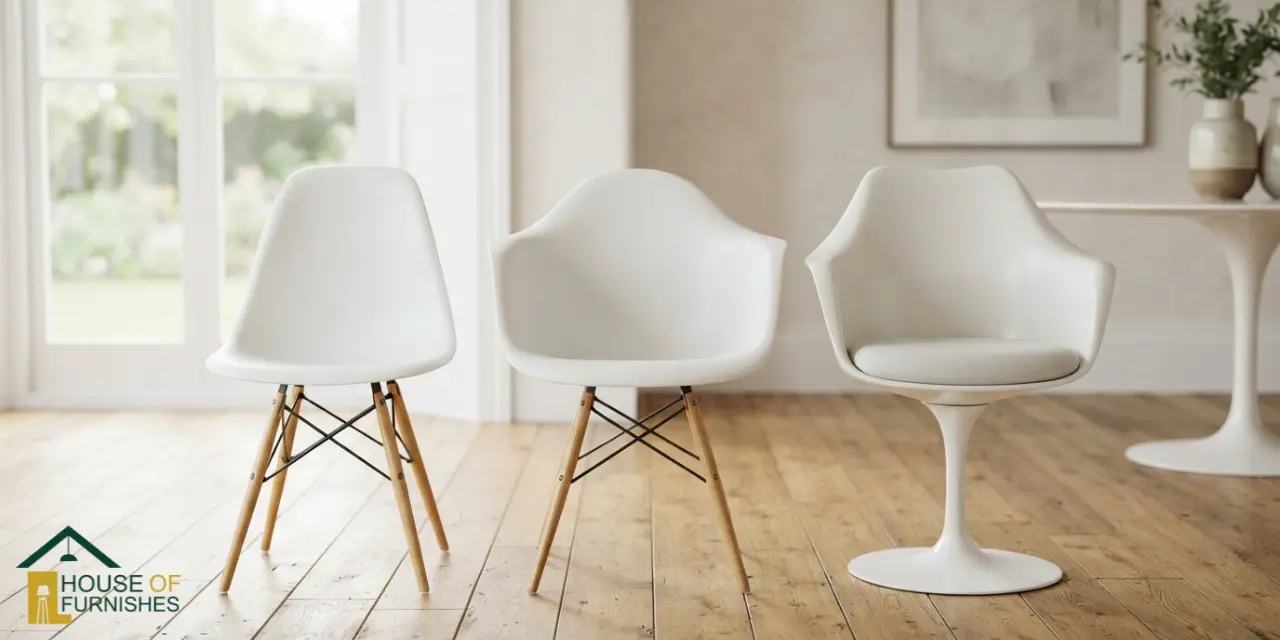
The dsw vs daw vs Tulip choice is really one question: how much chair do you want around your table? The DSW is the lean armless classic, the DAW its arm-chaired sibling for lingering dinners, and the Tulip the space-age pedestal that removes legs from your life entirely. Here’s how they compare in real dining rooms — including the mixing trick designers use that most buyers never consider.
DSW: The Default for a Reason
If you read our decoder on what does dsw mean, you know the letters: Dining height, Side chair, Wood base — the most-bought dining silhouette of the last 75 years, and its dominance is earned:
- Armless = tuckable. Slides fully under the table, freeing floor space — the biggest advantage in small UK dining rooms
- Ergonomic shell. Moulded around seated posture; comfortable through long dinners with no cushion
- Universally minglable. Farmhouse, glass, oak, marble — it sits happily with all of them
Choose DSW when: space is tight, chairs must tuck, or you’re seating six-plus. A set of white dining chairs in this style is the closest thing dining furniture has to a can’t-miss decision.
DSW vs DAW: The Same Chair, With Hospitality
Swap the S for an A — Dining Armchair, Wood base — and the shell grows gentle wraparound arms. Small change on paper; at the table, it isn’t:
- Arms invite lingering. Elbows rest, posture relaxes, dinner stretches into evening — the DAW is the host’s chair
- More presence per chair. Two DAWs can head a table the way six DSWs flank it
- The trade-off is literal centimetres. Arms add width (~62cm vs ~46cm) and stop the chair tucking fully under. In a tight room, that permanently protruding chair matters
Choose DAW when: you have the space, host long dinners, or want head-of-table chairs with quiet status. Classic move: DAWs at the ends, DSWs along the sides.
Tulip: The One-Legged Rebel
The Tulip comes from Eero Saarinen — Eames’ close friend — who declared war on the “slum of legs” under every table. His answer: a single sculptural pedestal, still manufactured by Knoll since 1957.
- Zero leg clutter. Under a pedestal table the floor becomes open space — small rooms look dramatically bigger
- The most “designed” look of the three — futuristic, gallery-ish, unmistakable
- Swivel versions exist, which children rank as the greatest furniture feature ever invented (parents disagree by dessert)
Choose Tulip when: your style leans space-age, your table is round, or leg-tangle genuinely annoys you. Skip it when: your table is a chunky wooden rectangle — pedestal chairs against thick table legs is a style argument no room wins.
The Designer’s Mixing Trick
Here’s what buyers rarely consider: you don’t have to pick one. All three shells share mid-century DNA, so they mix safely:
- Ends vs sides: DAW armchairs heading, DSW sides — traditional hierarchy, updated
- Colour accents: four black dining chairs plus two blue dining chairs at the ends is the highest-impact £0 styling decision in dining
- The rule of one change: vary colour OR shape per table, never both — mixed shapes in mixed colours reads waiting-room
DSW vs DAW vs Tulip: Quick Decision Table
- Small room, chairs must tuck: DSW
- Long dinners, generous room: DAW (or DAW ends + DSW sides)
- Round table, modern room: Tulip
- Six kids and spaghetti: DSW — wipe-clean shells, no arm crevices, no swivelling into siblings
UK buyers can compare the moulded-shell family with local delivery at houseoffurnishes.co.uk.
FAQs
What’s the actual difference in dsw vs daw?
The shell: DSW is armless, DAW adds moulded arms. Same height, same dowel base — arms add ~16cm of width and stop full tuck-under.
Are Tulip chairs comfortable?
Yes — most versions add a seat pad, and the pedestal means no table-leg fights. The DAW still wins the three-hour-dinner contest.
Can these styles work with a traditional table?
DSW and DAW, absolutely — moulded shells against rustic wood is a beloved contrast. Tulip wants a pedestal partner.
Final Thoughts
DSW for space, DAW for hospitality, Tulip for drama — and a disciplined mix for the table that looks like a designer visited. Start with the room’s constraints, let style break the tie, and browse the whole moulded-shell family in our Eames dining chair collection — every colour your kitchen has been secretly asking for.
One thought on “DSW vs DAW vs Tulip: The Complete Dining Chair Comparison”